
Post-independence kapurthala
This page explores Kapurthala after independence, tracing how the former princely state transitioned into a district of the newly independent India. Kapurthala post 1947 saw significant administrative restructuring, as the state merged with the Indian union and its royal governance gave way to democratic institutions and modern civic administration.
Understanding the Kapurthala state merger India underwent helps explain many aspects of the city’s current layout, institutions, and land use — several former palace complexes were repurposed as schools, colleges, and government buildings during this period, preserving their structures while giving them new civic purpose. The Kapurthala district formation history detailed here covers the boundary changes, administrative divisions, and integration into Punjab’s post-independence governance framework.
It connects the dots between Kapurthala’s royal past and its present-day identity as a functioning district within Punjab. It bridges the History and For Residents sections of this site, offering context for why certain institutions and landmarks exist in their current form, and how the city balanced preserving its heritage while building a modern administrative and economic foundation.
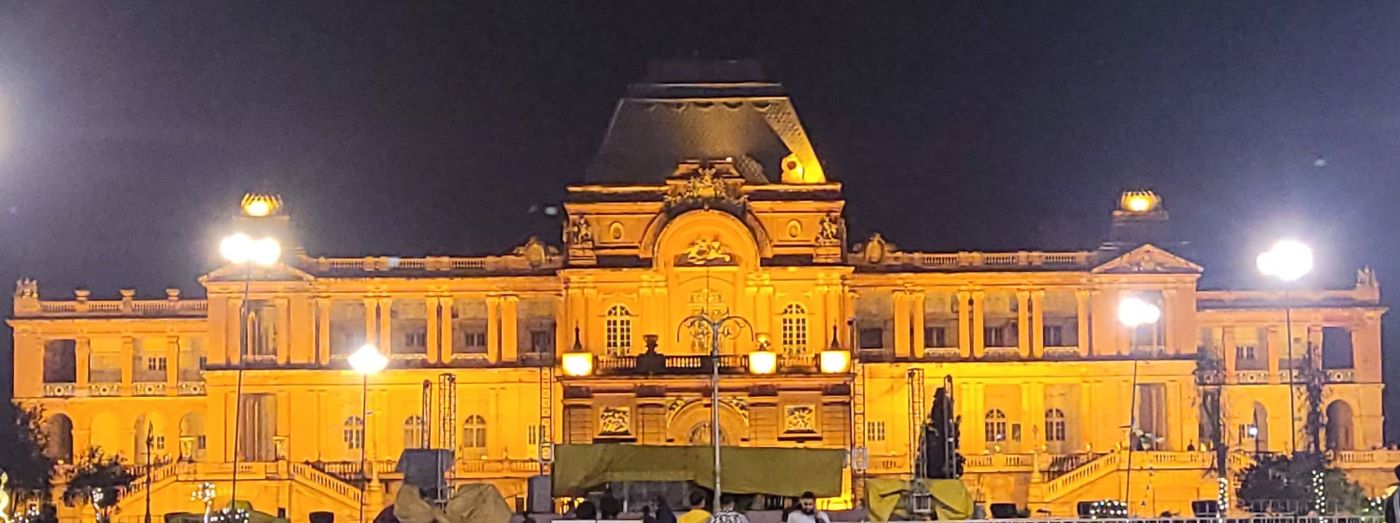
After India gained independence in 1947, Kapurthala underwent a remarkable transformation. Once known primarily as the princely state of the Jat Sikh rulers and the “Paris of Punjab” because of its magnificent architecture, the district gradually developed into an important centre of industry, education, agriculture, infrastructure, and public administration. Government initiatives, industrial investments, and educational expansion have significantly contributed to the district’s socio-economic development.
Industrial Development
- Rail Coach Factory (RCF) – The Backbone of Industrial Growth
The most significant milestone in Kapurthala’s industrial history came with the establishment of Rail Coach Factory in 1986.
Importance
- One of India’s largest railway coach manufacturing units.
- Manufactures:
- LHB Coaches
- Vande Bharat coaches and components
- Metro coaches
- MEMU/DEMU coaches
- Provides employment to thousands of engineers, technicians and skilled workers.
- Supports hundreds of ancillary industries supplying components.
Economic Impact
- Increased urbanisation.
- Growth of transport and logistics.
- Development of housing colonies.
- Rise in local businesses and service sector
Agro-Based Industries
Agriculture has remained the backbone of Kapurthala’s economy.
Major industries include:
- Rice Mills
- Flour Mills
- Oil Extraction Units
- Dairy Processing
- Seed Processing
- Poultry Farms
Kapurthala is among Punjab’s important rice-producing districts, and numerous rice shellers export high-quality basmati rice.
Small Scale Industries
Industrial estates encouraged growth of:
- Steel fabrication
- Furniture manufacturing
- Agricultural implements
- Packaging industries
- Plastic products
- Electrical equipment
- Auto workshops
Service Sector Expansion
Post-2000, rapid growth occurred in:
- Banking
- Insurance
- Healthcare
- Retail markets
- Hospitality
- Information Technology services
- Logistics
Timeline of Major Developments in Kapurthala
|
Year |
Development |
|
1947 |
Integration into the Indian Union after Independence |
|
1948 |
Merger of the princely state into PEPSU |
|
1956 |
PEPSU merged into Punjab |
|
1960s |
Green Revolution boosts agricultural productivity |
|
1961 |
Sainik School Kapurthala established |
|
1986 |
Rail Coach Factory established |
|
1997 |
Punjab Technical University established at Kapurthala |
|
2000s |
Rapid expansion of private education and IT training |
|
2017 |
ITC Limited – Kapurthala (Foods Business Division) |
|
2019 |
Major development works at Sultanpur Lodhi for Guru Nanak Dev Ji’s 550th Prakash Purab |
|
2020s |
Modern rail coach manufacturing, skill development, digital infrastructure, and continued industrial expansion |